
Why I love visiting Vienna.
There are a variety of reasons why Vienna, Austria, should be on your list of cities to visit – the tap water comes directly from the Alps, it has countless coffee houses, it is easily reachable, and it is a safe city with public spaces designed for both men and women.
Where is Vienna?
Vienna is conveniently positioned in the center of Europe, in the northeastern part of Austria. It is just a few hours on the train from Brno in the Czech Republic, Bratislava in Slovakia, and Budapest in Hungary. And, of course, the city has an international airport.
Vienna (Wien) used to be the capital of the Habsburg Monarchy and the center of the Austro-Hungarian Empire. This has created a capital city that is frankly too large for the relatively small Austrian nation. The current population of Austria is about 9 million and the current (official statistics) population of Vienna is around 2 million.
Over the past few years, Austria has become a pioneer in long-distance (overnight) train travel, with ÖBB Nightjet train schedules arriving and departing from Vienna’s Central Train Station (Wien Hauptbahnhof) to such far-flung places as Amsterdam, Berlin, Brussels, Paris, Rome, Zagreb, and Zurich. And if you book well in advance, you’ll get a great deal and also save on a night’s accommodation in the process.

What to do and see in Vienna?
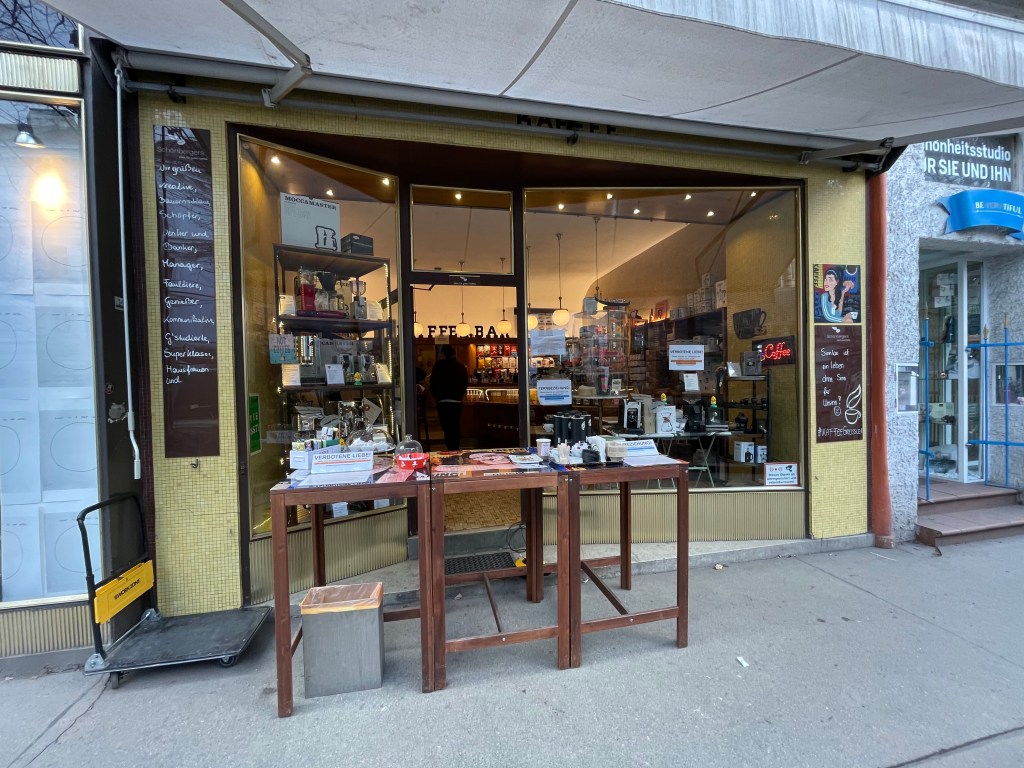
Whenever I arrive to Vienna, it’s usually because I have gone there to walk. I begin by walking from Wien Hauptbahnhof to my favorite coffee shop (Schönbergers Caffe, Wiedner Hauptstraße 40) before then crossing through the Naschmarkt outdoor food market and then following the Mariahilfer Straße shopping street to eventually arrive at St. Stephen’s Square (Stephansplatz). If I’m feeling up for the task, I’ll then proceed along the (Donaukanal) Danube Canal and climb up to the Kahlenberg, for fantastic views of the city and the surrounding vineyards.
If you are into walking and would like to meet new people, Mammutmarsch organizes an annual 30 km and 55 km walk that starts close to the Danube Tower. The 55 km walk (that I took) goes through the Prater park, along the Danube Canal, up to the Kahlenberg, across the town of Klosterneuburg, and then follows the Danube River back to the Danube Tower and the close-by starting point. There are food and drink stations along the route and at the end of the walk, you get a medal from the organizers. I highly recommend it if that’s your jam. Website: https://mammutmarsch.de/50-km-marsch/mammutmarsch-wien-30-55-km/
With an endless list of things to do and see in Vienna, here are the must-visit places that I would recommend to someone traveling to the city for a weekend break:
- Belvedere Palace Vienna. The museum within the palace houses some of the best Austrian art from the Middle Ages, as well as showcasing classic works by the Austrian artist, Gustav Klimt. Klimt is most famous for ‘The Kiss’, completed in 1908. The Belvedere is central and easy to reach on foot from the Wien Hauptbahnhof. Website: https://www.belvedere.at/en
- Schönbrunn Palace. The Schönbrunn Palace was the main summer residence of the Habsburg rulers and is an exceptional example of Baroque, Neoclassical, and Rococo architecture. Adjacent to the palace is the Schönbrunn Zoo, the oldest zoo in the world. The most convenient way of reaching the Schönbrunn Palace is by taking the U-Bahn (metro) line U4 to the station “Schönbrunn”, which is located directly at the Palace. Website: https://www.schoenbrunn.at/en/
- Prater. The Prater is Vienna’s oldest amusement park. It is a must-visit destination, despite its kitsch feel. It has some toe-curling rides (which I never go on) and has the famous Viennese Giant Ferris Wheel – the symbol of the Prater. The ferris wheel is quite pricey, but worth it. There are also some restaurants in the park, but I recommend avoiding them. Website: https://www.praterwien.com/en/home
- Haus der Musik. The House of Music is a fun, interactive way to spend a few hours, and is particularly worthwhile if you are traveling with children. It’s a museum of sound and music, spread across an exhibition space of 54,000 sq. ft. It houses a range of hi-tech interactive and multimedia presentations; introducing the world of music, from the earliest human use of instruments to the music of the present day. The musical staircase is fun to play around on, as too is the interactive composer section where you get to conducting the philharmonic orchestra. It’s also very easy to reach as it is a short walk from Stephansplatz. Website: https://www.hdm.at/en/
- Wiener Staatsoper. If you could visit any opera house in the world, the Vienna State Opera House would have to be top of the list – it is an iconic venue, known for its world-class performances and rich history. If, however, you can’t stomach sitting through a performance, tours of the building are available and also recommended. ‘Mission Impossible’ fans might also want to visit because the State Opera House was featured in Mission Impossible 5. It’s located on the (Ringstraße) Vienna Ring Road, and is a 5-minute walk to Stephansplatz. Website: https://www.wiener-staatsoper.at
- Central Cemetery. To get to the Central Cemetery (Zentralfriedhof), take the U3 to Simmering, and then take the tram line 6. The cemetery is large and home to many famous people who breathed their last in Vienna. Among the big names buried at the cemetery: Beethoven, Brahms, Salieri, Schoenberg, Schubert, and Strauss. Incidentally, Beethoven was also born in Vienna. Whenever I visit, I also pay my respects to Ludwig Boltzmann, one of the fathers of modern physics. His famous equation on entropy is engraved on his memorial stone and if you were to throw a glass at the tombstone, you could always justify that you were doing so as a nod to entropy and Boltzmann himself. Website: https://www.wien.info/en/see-do/sights-from-a-to-z/central-cemetery-342500
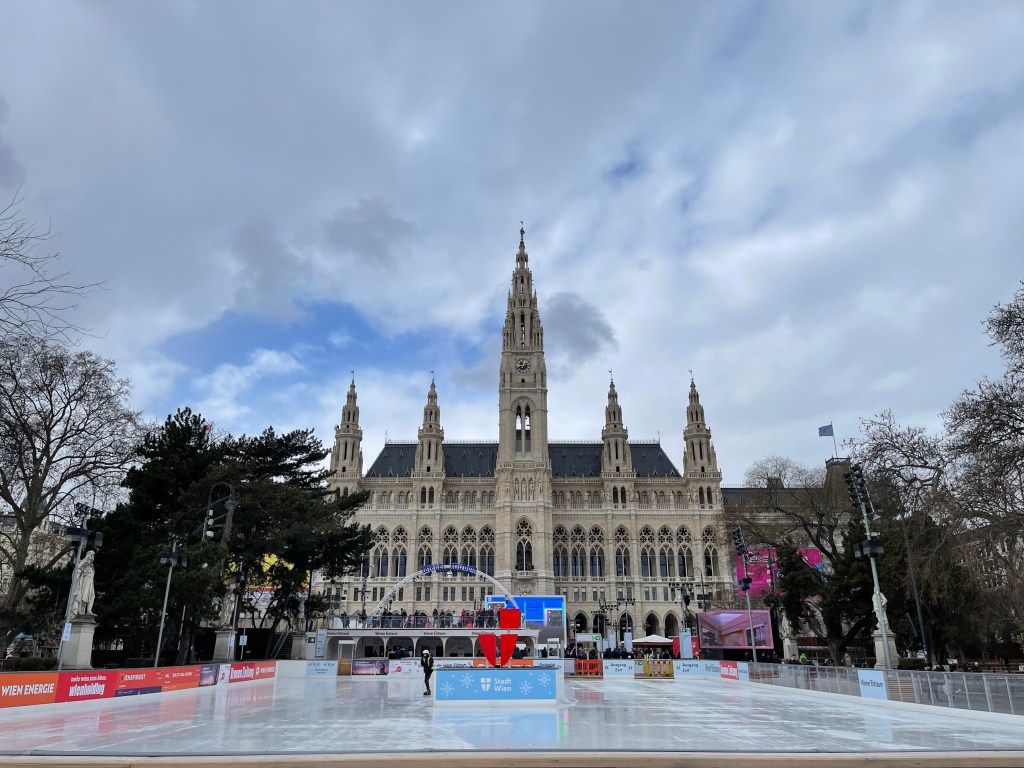
- Rathausplatz. The Rathausplatz is a square, opposite the (Rathaus) City Hall that is a popular site for open-air festivals and the Rathaus Film Festival. In winter, the square is transformed into The Vienna Ice World – one of the biggest open-air artificial ice rinks in the world. Its location is similarly convenient as it is just a 15-minute walk from Stephansplatz. Website: https://www.wienereistraum.com/en/eislaufen/

Where to eat and drink in Vienna?
Vienna has so many excellent coffee houses, but I have two that I most frequent. The first, Schönbergers Caffe, I’ve mentioned already. The second, is the bookshop café, ‘Phil’, at Gumpendorfer Str. 10 – 12. Phil’s Google listing describes it as a “Hip venue where most sofas, chairs, DVDs, books & records can be purchased to take home with you.” and this has been my experience with this coffee house. I’ve never taken a chair or sofa home with me (not for want of trying) but I have enjoyed many a time sat slouched on a sofa, taking intermittent sips of coffee, reading one of the many novels that adorn the walls of this bibliophilic Vienna institution. Vegans and vegetarians will also feel at home here with Phil’s varied menu that caters for all dietary requirements. Website: https://www.phil.love/
For an on-the-go snack, I can’t recommend enough the Austrian and Bavarian answer to the American hamburger – the glorious Leberkässemmel, which can be bought in most supermarkets in the center. Leberkässemmel is ground meat that has been baked into a meatloaf, served inside a halved (semmel) bread roll. When ordering, you will be asked if you want the standard version or the one with cheese infused within the meat. Both are excellent, and my advice is to then add, “mit senf” (with mustard). The calories alone will power you through the day until dinnertime.
For dinner, I recommend booking a table at Schnitzel Wirt, Neubaugasse 52. It’s a family-run restaurant that specializes, among other traditional Austrian dishes, in serving schnitzel. If you wish to try the real-deal Wiener Schnitzel, you must order your schnitzel prepared with veal cutlet. Please note, though, that credit and debit cards are not accepted – it’s hard cash only. Website: https://www.schnitzelwirt.co.at/
An Austrian once said to me that Vienna’s nightlife is so boring that all the famous Viennese artists and musicians choose to live in Berlin instead. I’m afraid there is a kernel of truth to this statement. I know of some funky bars in the city, but I’m not really a night owl. The only bar that I really know, one I was invited to by Viennese friends, is SpielBar, Lederergasse 26. They serve food, have a solid selection of alcoholic and non-alcoholic drinks, the staff are friendly, and, if you are English, you can beat the locals in a game of darts 🙂 Vienna, with isolated incidents, is a very safe city – walking alone at night in the center shouldn’t be an issue, so my advice, if looking for a bar, is to go to the center and just walk into a bar that looks interesting. Website: https://spiel-bar.at/
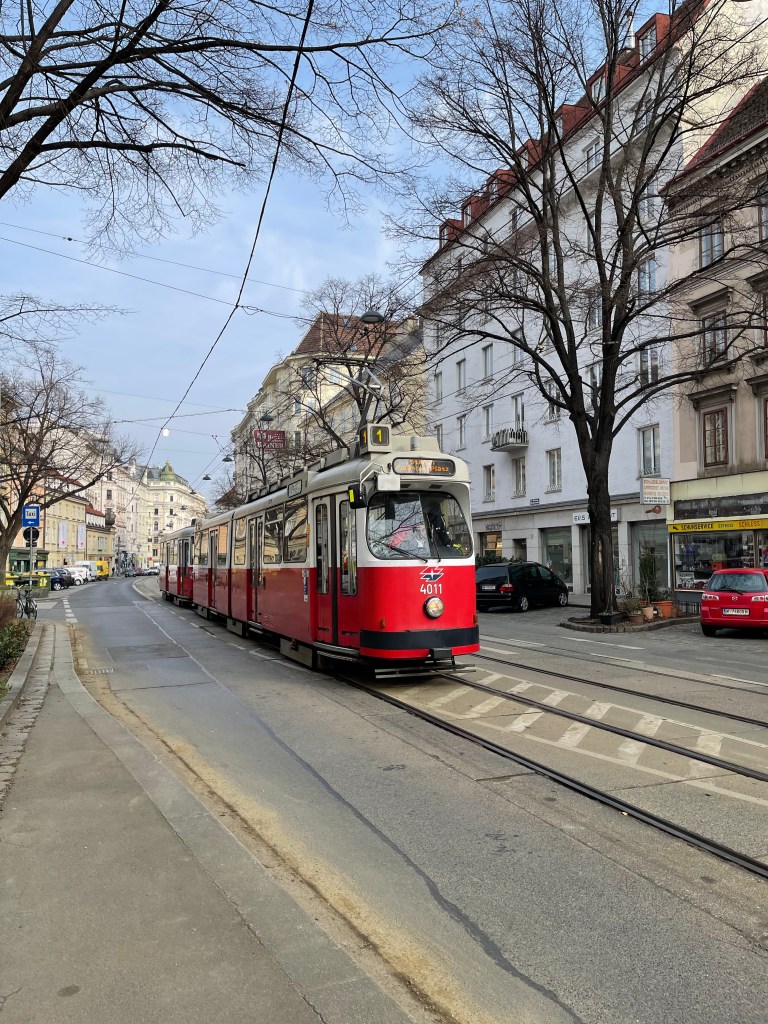
There’s also no need to worry about getting back to your hotel as the Vienna public transport system is excellent. The subway network operates every day from approx. 5:00 am to around midnight, and every 15 minutes throughout the night on Fridays, Saturdays and public holidays. This scheduling also applies to Vienna’s tram network. During the week, after midnight, you don’t have to worry because there are night busses.
Where to sleep in Vienna?
Accommodation in Vienna is a bit of a mixed bag – you either get a room with great service and all of the modern amenities, or you find yourself in an outdated room with outdates amenities and staff projecting the famous Viennese gruff attitude.
The first time I stayed in Vienna, when I was in my twenties, I slept rough on one of the university grounds. Every subsequent time visiting the city, now (for the most part) past the follies of youth, I have slept in a hotel close to the Wien Hauptbahnhof. Being so close to the Vienna Main Train Station is convenient when you arrive by train, and the walk to the center is only about 40 minutes. Alternatively, you can take the tram (15-minute journey) or the metro (5-10 minutes).
I usually stay at the B&B Hotel Wien-Hbf, Bloch-Bauer-Promenade 5. One of things that I like about this hotel is that the management are very flexible: you can either book ahead, or contact them if it is a last-minute booking and pay upon arrival. For what you get, the price of the room is very good. The rooms are always very clean, check-in and check-out are seamless, the rooms have a thermostat that you can adjust to your liking, it’s in a quiet neighborhood, there is an option of paying for breakfast on-site, and the WIFI is strong throughout the building. The front-desk staff are also incredibly friendly and helpful. Check-in time is 3 pm and check-out time is 12 pm. I have stayed in other hotels – all in the Main Train Station area, and this one seems to offer the best value-for-money experience. If you choose not to have breakfast at the hotel, there is an affordable Hofer supermarket around the corner, and there is a superb café, where you can share a work space if you wish, at Hotel Schani – a 5-minute walk from B&B Hotel Wien-Hbf. Website: https://www.hotel-bb.com/de/hotel/wien-hbf

Conclusion.
Vienna is one of the must-see city gems in Central Europe. I live in Prague and while the cities are comparable in size and history, Vienna is much safer, about the same in terms of prices, and is so much more open planned, with its wide boulevards. The city was heavily bombed during World War II, which meant that architects and builders could start from scratch in many sections of the city that were so heavily damaged. And, as I have already noted, it is a city designed for both men and women.
Taken from the European Union’s website: “Vienna is considered a pioneering city in gender planning for its more than 25 years of practice. The Women’s Office initiated planning-centred efforts in 1991, leading to a dedicated coordination office in 1998. Gender mainstreaming became a city-wide strategy in 2000, expanding into spatial development.”
The only real criticism that I have of Vienna is that some of its inhabitants display the famous Viennese gruff attitude – an attitude that is unfortunately prevalent in the Czech Republic. The majority of people in Vienna, though, are friendly and open. If you do experience the Viennese gruff, my advice is to politely smile and just continue on your way. It is, of course, more symptomatic of the older generation – the younger generation (in both Vienna and the Czech Republic) tend to be a lot more upbeat and generally a lot happier and open.
Have a wonderful time in Vienna!
This post contains NO AFFILIATE LINKS and as the author of this post, I earn nothing for recommendations I suggest in my posts on this website. Affiliate linking, when conducted correctly, can be a benefit for the reader and the author, but I choose not to make an additional income from places and products that I personally recommend from my own personal experience. I am not a fan of affiliate linking as, is often the case, an author promotes a business primarily for the financial incentive. Neville David Thomas.
Read more blog posts: https://nevilledavidthomas.com/blog/
Have you visited Vienna? Do you agree or disagree with any of the content that I have mentioned in this post? Do you have any additional information that you would like to share? Please leave a comment below!


 Neville David Thomas
Write a Comment!