Salamanca and Oxford: A tale of two university cities.
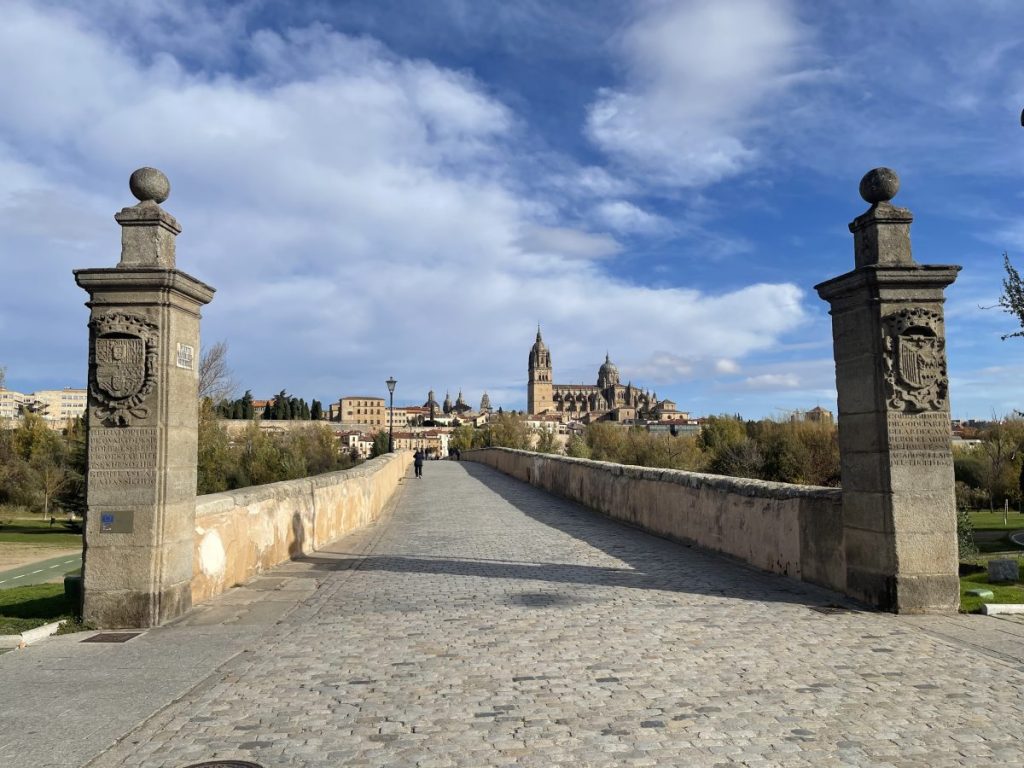
Having studied at Oxford and having stayed in Salamanca on my Via de la Plata pilgrimage walks, I can attest that the two are remarkably similar – both, upon first impressions, are urban doppelgangers of each other.
Few places in the world resonate with the weight of intellectual tradition quite like Salamanca and Oxford. These cities, home to two of the oldest universities in Europe, have shaped the course of Western thought for centuries.
Despite their geographical and cultural differences, both Salamanca, Spain, and Oxford, England, share striking similarities in their historical legacies, architectural grandeur, academic prestige, and the intangible yet palpable aura of scholarly pursuit. To walk their streets is to step into a living manuscript of history, where past and present coalesce into a continuum of learning, discovery, and tradition.
Historical and Academic Legacy.
The University of Salamanca, founded in 1218, is Spain’s oldest university and the third oldest in Europe. Oxford University, with evidence of teaching dating back to 1096, holds the distinction of being the oldest university in the English-speaking world. Both institutions have played pivotal roles in the development of higher education, producing some of the greatest minds in philosophy, science, politics, and the arts.
Salamanca was once the epicenter of scholasticism in Spain. During the Renaissance, it became a hub for intellectuals debating humanism, theology, and law. It was here that Francisco de Vitoria developed early principles of international law, influencing European political thought for centuries. Similarly, Oxford has been at the forefront of global scholarship. The likes of John Locke, Adam Smith, and Stephen Hawking walked its hallowed halls, each leaving an indelible mark on their respective disciplines.
Both universities have also maintained a commitment to classical education, emphasizing the study of Latin, philosophy, and the humanities, long after such curricula have faded from other institutions. The intellectual traditions of Salamanca and Oxford are bound by a reverence for knowledge, debate, and the pursuit of truth.
Architectural Splendor: Gothic Grandeur and Collegiate Enclaves.
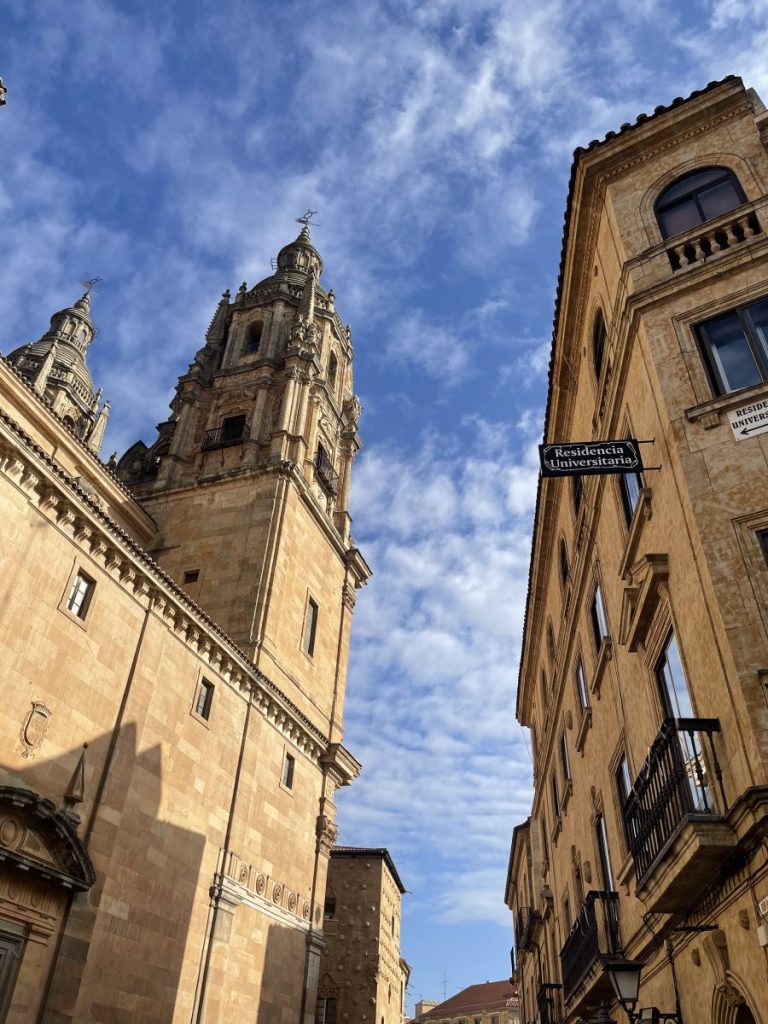
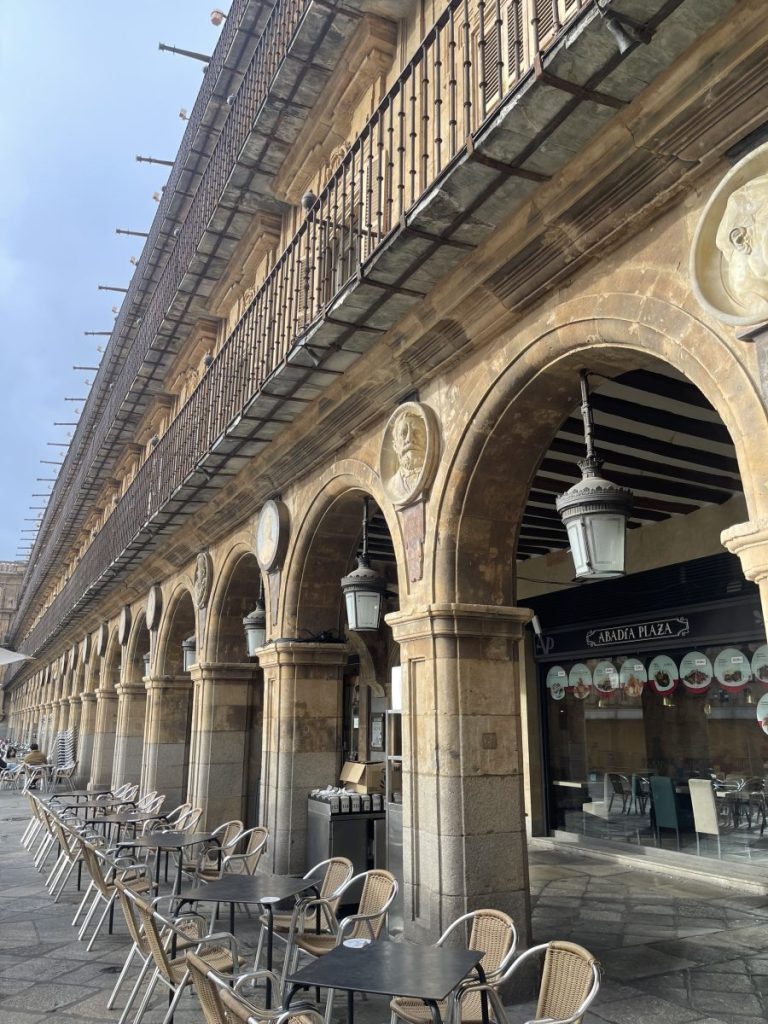
One of the most immediate and visually striking similarities between Salamanca and Oxford is their architecture. The sandstone buildings of both cities glow golden under the right light—Salamanca’s Plateresque façades mirroring the honey-hued limestone of Oxford’s dreaming spires.
Salamanca’s most iconic architectural gems include the Universidad de Salamanca’s ornate façade, featuring intricate carvings of religious and mythological figures. The famous frog perched atop a skull—a tiny but famous detail—has become a symbol of the university, with legend dictating that spotting it brings good luck to students. The Plaza Mayor, a baroque masterpiece, serves as the city’s vibrant heart, much like Oxford’s Radcliffe Square, where the grand Radcliffe Camera stands as a monument to knowledge.
Oxford’s skyline is defined by the spires of its historic colleges, each with a rich history of its own. The Bodleian Library, one of the oldest libraries in Europe, stands as an emblem of intellectual pursuit, much like Salamanca’s Biblioteca General Histórica. The cloistered courtyards of Christ Church and Magdalen College, with their perfectly manicured gardens and medieval halls, echo the enclosed patios of Salamanca’s university buildings, designed for contemplation and study.
The Student Experience: Tradition and Modernity.
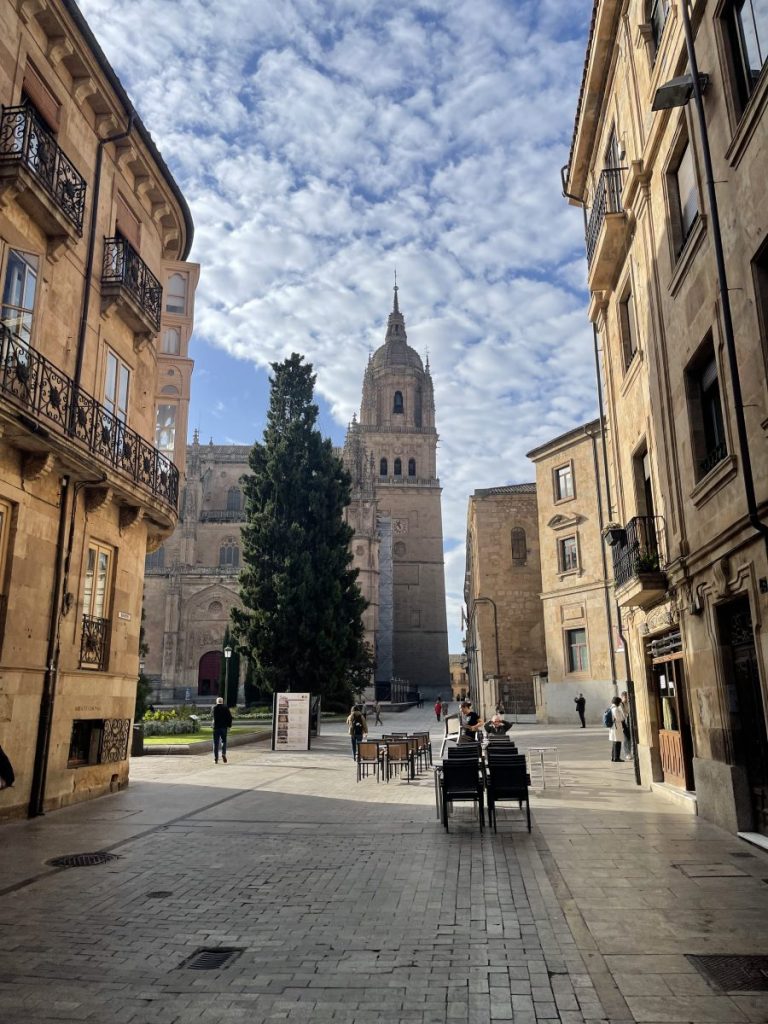
Despite their centuries-old traditions, both Salamanca and Oxford remain thriving centers of student life. The interplay of academia and everyday existence creates a unique atmosphere where history is not merely preserved but actively lived.
Both cities host vibrant student communities, where ancient traditions intermingle with contemporary cultural life. The ritual of formal dinners in Oxford colleges mirrors the reverence for tradition seen in Salamanca’s academic ceremonies, where students don their characteristic tunics and capes for formal events. The presence of international students in both cities adds to their cosmopolitan nature, making them global hubs of intellectual exchange.
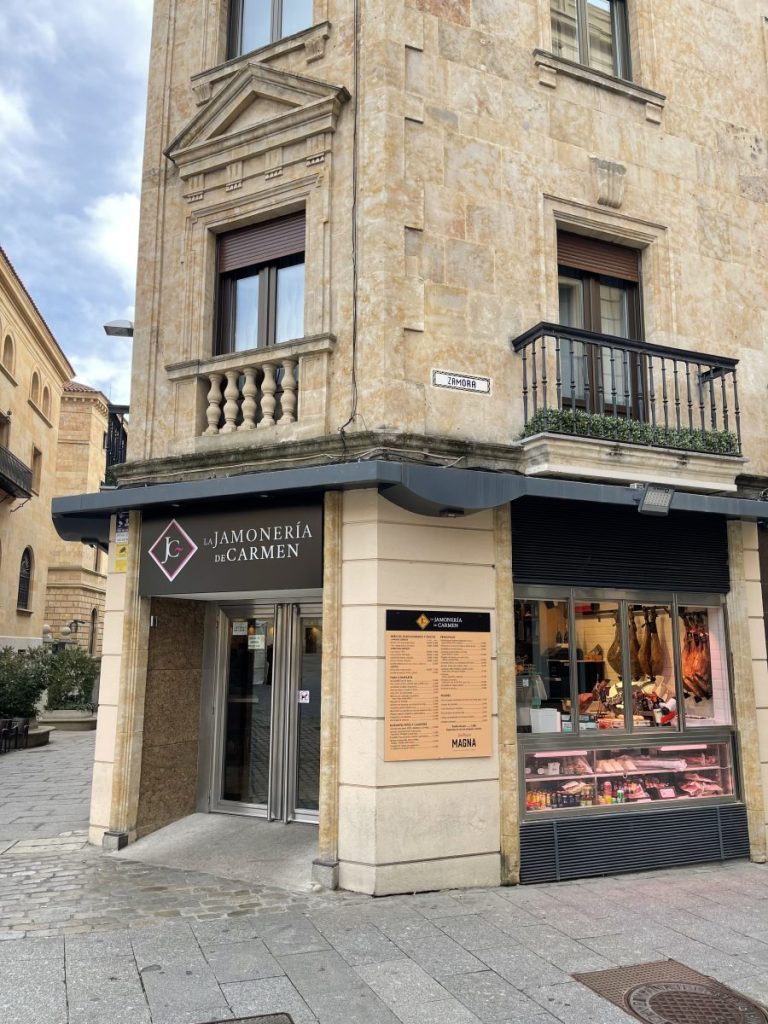
At night, Salamanca’s bars and cafés come alive, with students engaging in the age-old practice of philosophical discourse over tapas and wine. The city’s reputation for an active nightlife parallels the famed Oxford pub culture, where students and professors alike have historically gathered in places like The Eagle and Child, where the Inklings—including J.R.R. Tolkien and C.S. Lewis—held their literary discussions.
Literary and Cultural Significance.
Both Salamanca and Oxford have inspired literary greats. Salamanca, immortalized in the works of Miguel de Unamuno, who served as the university’s rector, has long been a setting for Spanish literary and philosophical thought. The city’s historic streets and academic halls feature in various works of Spain’s literary Golden Age, reflecting its status as a beacon of knowledge.
Oxford’s literary significance, meanwhile, is unparalleled in the English-speaking world. From Lewis Carroll’s “Alice’s Adventures in Wonderland” to the fantasy epics of Tolkien and Philip Pullman, the city’s misty streets and grand colleges have been the backdrop for some of the most enduring literary creations of all time. The connection between place and narrative is strong in both cities, with their university settings fostering storytelling and intellectual exploration alike.
Influence on Global Thought and Society.
The intellectual legacies of Salamanca and Oxford extend beyond academia into global affairs. Salamanca played a crucial role in Spain’s expansion into the New World, with its scholars debating the rights of indigenous peoples and the moral implications of empire. Oxford, similarly, has been a training ground for global leaders, including multiple British prime ministers, scientists, and Nobel laureates.
Both universities have been bastions of independent thought and, at times, centers of controversy. Whether it be Salamanca’s defiance of Spanish authoritarianism in the 20th century or Oxford’s historic clashes between science and religion, these institutions have been at the forefront of intellectual and social transformation.
The Timeless Allure of University Cities.
Salamanca and Oxford are more than just cities; they are living institutions, repositories of knowledge, and testaments to the enduring power of education. Their histories, traditions, and physical beauty create an atmosphere where learning is not confined to lecture halls but embedded in the very fabric of the city. Though one sits in the heart of Castile and the other in the rolling countryside of England, both Salamanca and Oxford share an indelible bond: a commitment to intellectual pursuit that has withstood the test of time.
To visit either city is to step into a world where past and present converge, where the echoes of history whisper through the corridors of knowledge, and where every stone, every street, and every book tells a story of the endless human quest for understanding.
The Cultural and Spiritual Significance of Salamanca on the Via de la Plata.
The Via de la Plata, meaning “Silver Route,” stretches from Sevilla (Seville) in the south to Astorga in the north. Originally a Roman road, it later became a vital trade and pilgrimage route, allowing travelers to move through the heart of Spain’s diverse landscapes. Unlike the more famous Camino Francés, the Via de la Plata is less crowded, offering a contemplative journey through historic towns, rolling plains, and medieval heritage sites.
Salamanca serves as one of the most significant stopping points along this route, offering an essential pause for pilgrims both physically and spiritually. The city has long been a meeting point for scholars, travelers, and seekers of knowledge, making it a fitting place for those undertaking the transformative pilgrimage to Astorga, and often further to Santiago de Compostela.
Salamanca’s importance on the Via de la Plata is multifaceted. Its history, architectural grandeur, and academic legacy make it a unique waypoint where faith, culture, and scholarship intersect.
1. A Historical Haven for Pilgrims
Salamanca has welcomed pilgrims for centuries, serving as both a religious center and a strategic stop on the way. The city’s historic streets, lined with golden sandstone buildings, evoke the grandeur of Spain’s past while providing a place for reflection and rest. The (Main Square) Plaza Mayor, often considered one of Spain’s most beautiful squares, is a social and cultural hub where pilgrims can experience the vibrant life of Salamanca before continuing their journey.
2. Architectural and Religious Landmarks
For many pilgrims, Salamanca is not just a place to rest but a site of religious inspiration. The city’s two cathedrals—the Old Cathedral (Catedral Vieja) and the New Cathedral (Catedral Nueva)—are must-visit landmarks. The Old Cathedral, dating back to the 12th century, provides a glimpse into Romanesque architecture, while the New Cathedral, completed in the 18th century, stands as an awe-inspiring example of Gothic and Baroque grandeur.
Another essential stop is the Convento de San Esteban, a Dominican monastery known for its intricate Plateresque façade and its connection to Christopher Columbus, who sought support for his voyages from the scholars here. Pilgrims often find solace within the monastery’s peaceful cloisters, where the history of faith and exploration intertwine.
3. A City of Knowledge and Reflection
Salamanca’s university, one of the oldest in the world, has been a beacon of learning since the Middle Ages. While not traditionally associated with pilgrimage, its presence adds an intellectual dimension to the journey. Pilgrims passing through Salamanca often engage with the city’s rich history of theological and philosophical debate, which can provide deeper insights into their own spiritual quests.
Accommodation for Pilgrims in Salamanca.
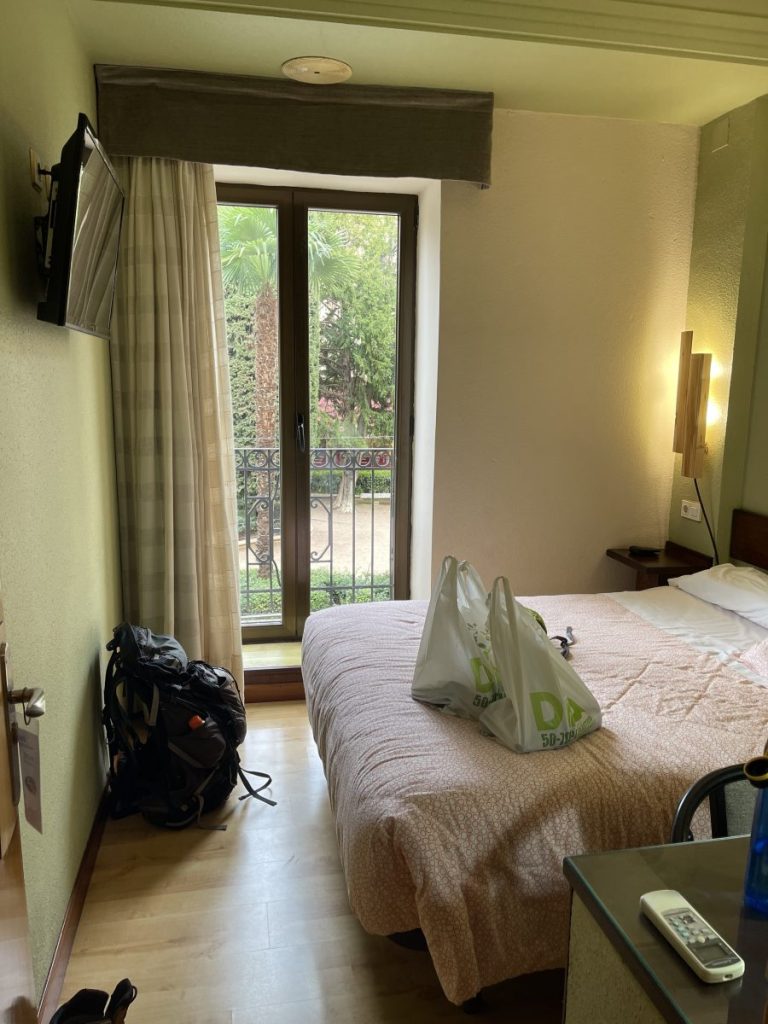

Given its significance on the Via de la Plata, Salamanca provides a range of accommodation options catering to the needs of pilgrims. Whether looking for traditional albergues, historic convents, or comfortable hotels, pilgrims can find a suitable place to rest before continuing their journey.
1. Albergues (Pilgrim Hostels)
For budget-conscious pilgrims, albergues offer affordable and communal lodging. The Albergue de Peregrinos Casa la Calera, located within the city, often provides a warm welcome to those walking the route. With basic facilities including bunk beds, showers, and kitchen access, it maintains the spirit of the pilgrimage by fostering a sense of community among travelers. However, the extent of this warm welcome does depend upon who is the volunteer Hospitalera/Hospitalero at the time, and pilgrims must keep in mind that the earliest check-in time at this albergue (and the albergue in Zamora) is 3pm. Why, I cannot fathom. Website: http://salamancaenlaviadelaplata.es/index.php/presentacion/albergue
Reviews for this albergue can be viewed on the Via de la Plata essential Gronze website and App: https://www.gronze.com/castilla-y-leon/salamanca/salamanca/albergue-peregrinos-casa-calera
2. Hotels and Guesthouses
Pilgrims who prefer additional comfort (and an earlier check-in time) can choose from a variety of hotels and guesthouses. Hostal Concejo, known for its affordable elegance and prime location near the historic center, offers a restful night’s sleep in lively surroundings. This is where I always stay when I am in Salamanca – I feel at home here. Website: http://www.hostalconcejo.com
Practical Considerations for Pilgrims.
- Food and Dining: Salamanca boasts a wealth of dining options, from traditional tapas bars to full-service restaurants. Pilgrims can refuel with local specialties such as hornazo (a meat-filled pastry) or enjoy a hearty menú del día at one of the city’s many eateries.
- Rest and Recovery: Given the physically demanding nature of the Via de la Plata, Salamanca offers various health and wellness services. From massage centers to pharmacies, pilgrims can find necessary medical assistance or simply take time to rest.
- Pilgrim Services: Local churches and organizations often provide guidance and support for pilgrims. The tourism office and cathedral offer information on the Via de la Plata, ensuring travelers are well-prepared for the next leg of their journey.
Salamanca as a Pilgrim’s Oasis.
Salamanca stands out as one of the most historically and culturally rich stops on the Via de la Plata. It is not merely a place to rest but a city that embodies the essence of the pilgrimage itself—a blend of faith, history, and personal transformation. Whether admiring its stunning cathedrals, engaging with its intellectual heritage, or simply finding solace in a quiet cloister, pilgrims passing through Salamanca carry with them the echoes of centuries of travelers who have sought meaning on this ancient road to Astorga, and further yet onwards to Santiago de Compostela.
Have a wonderful time visiting Salamanca!
This post contains NO AFFILIATE LINKS and as the author of this post, I earn nothing for recommendations I suggest in my posts on this website. Affiliate linking, when conducted correctly, can be a benefit for the reader and the author, but I choose not to make an additional income from places and products that I personally recommend from my own personal experience. I am not a fan of affiliate linking as, is often the case, an author promotes a business primarily for the financial incentive. Neville David Thomas.
Read more blog posts: https://nevilledavidthomas.com/blog/
Have you visited Salamanca? Do you agree or disagree with any of the content that I have mentioned in this post? Do you have any additional information that you would like to share? Please leave a comment below!





 Neville David Thomas
Write a Comment!