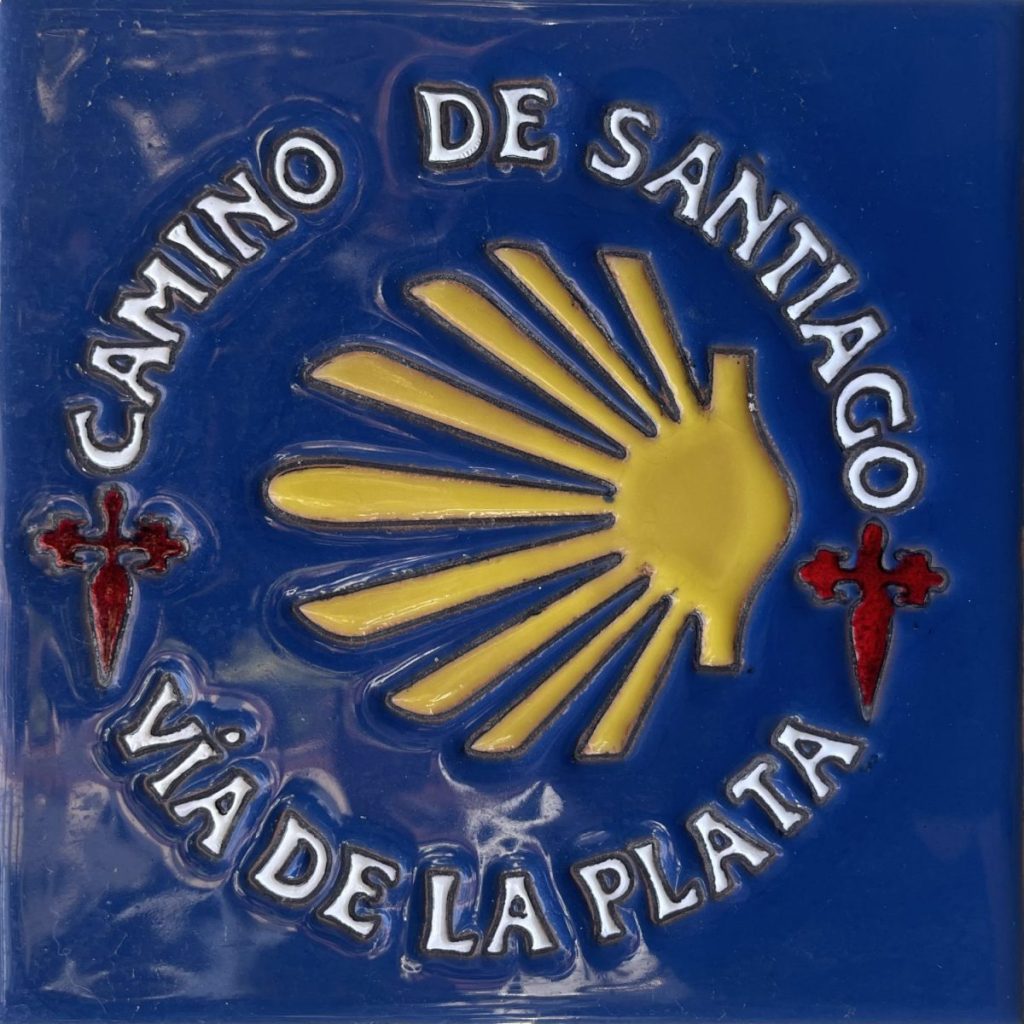
7 things I loved about the Via de la Plata.
The Via de la Plata is a Camino Santiago pilgrimage walk in Spain, starting from Sevilla and finishing in Astorga. The way is approx. 700 km in length, routed through the regions of Andalusia, Extremadura, and Castilla y Leon. I walked it in November, 2024.
Some pilgrims upon reaching Astorga, continue on to Santiago de Compostela. Others leave the Via de la Plata at Granja de Moreruela, to reach Santiago de Compostela via the Camino Sanabrés. And some pilgrims upon reaching Santiago de Compostela, continue on to Finisterre – some choose Muxia as their final pilgrimage destination.
The total length from Sevilla to Astorga is approximately 700 km, and the total length from Sevilla to Santiago de Compostela is approximately 1,000 km.
The positives far outweighed the negatives, and these are the 7 things that I loved the most about this incredible walk through lesser-visited regions of Spain.
1. Signage.
All along the route of the Via de la Plata, the signage was excellent. In fact, it was only after I began walking with a pilgrim from Austria, who introduced me to the Gronze app, that I began mostly ignoring the signs and following, instead, the route on my phone.
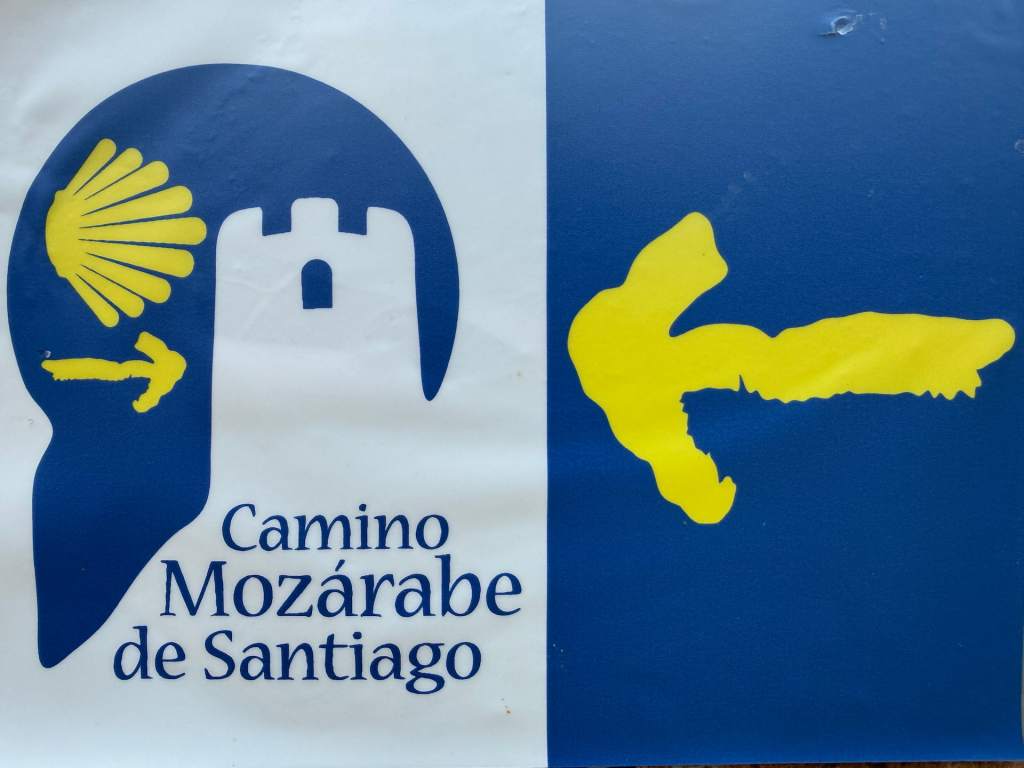
The amount of hours and work that has been spent on signposting this camino route is incredibly impressive. The route is typically signed with yellow arrows, pointing to the correct way ahead that you need to go. You could walk the route without access to an app – if you wanted to walk this camino without any electronics – but I would recommend downloading the Gronze app because when there are dark mornings it is sometimes difficult to make out the yellow arrows.
The Gronze website (https://www.gronze.com/) is useful because you can read and write reviews of the pilgrim accommodation options along the way, but you do need to download the app if you want to have access to the maps.
Gronze Maps: https://apps.apple.com/us/app/gronze-maps/id1665609602
2. Landscape and topography.
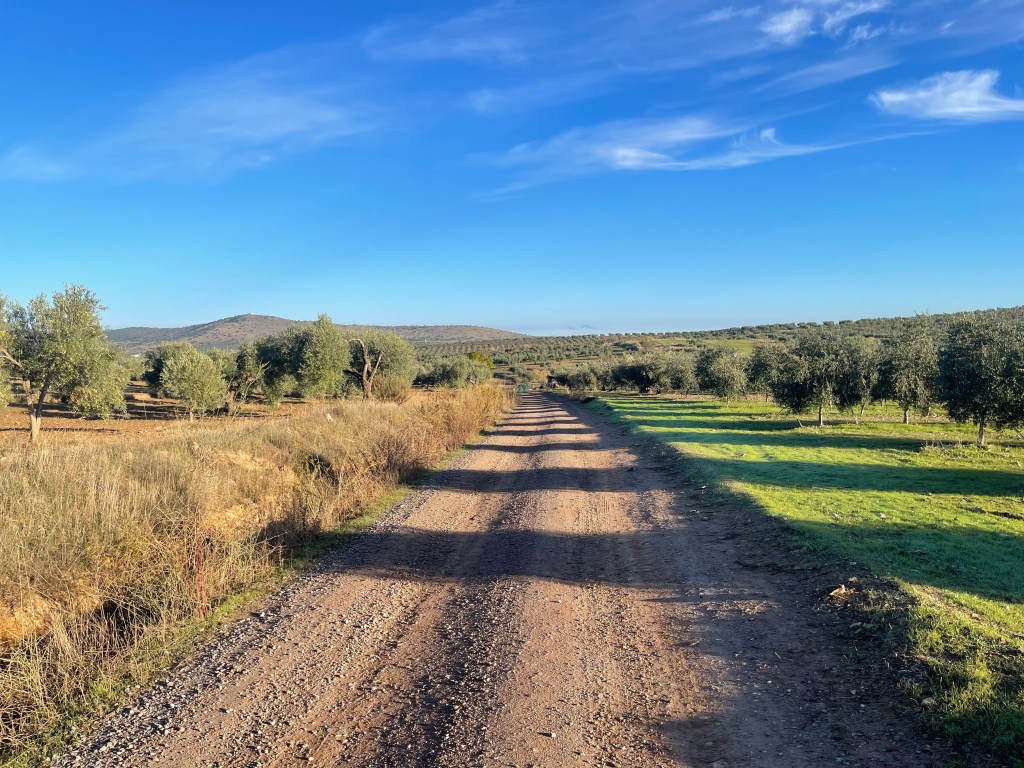
The picturesque route of the Via de la Plata starts off, after a pretty boring day’s walk out of Seville, by passing through farmland with oak trees and the famous Iberian pigs, before then changing into dehesa with olive trees for as far as the eye can see. Vineyards intermingle with the olive trees on the subsequent flat terrain, until you reach Carcaboso and the walk through the Cáparra four-gate arch to reach Aldeanueva del Camino. From here, there is a steep climb up to a plateau that begins to show characteristics of a Meseta plain. It’s very flat from Salamanca to Moreruela Farm – the turning point to the Sanabrés Way variant to Santiago de Compostela – and heading north to Astorga feels like you are walking through the Netherlands because it is so flat and the countryside resembles the its countryside so much.
While the majority of the walk is fairly flat and easy-walking terrain, there are a few notable climbs. The first is the climb up and over the (Cerro del Calvario) hill, into Almadén de la Plata. The next difficult climb follows the next day, halfway between Almadén de la Plata and El Real de la Jara. And the third strenuous climb is the one that you will walk from Aldeanueva del Camino to La Calzada de Béjar. There are other steep ascents along the way, but these three, for me, were the most demanding.
3. Price and types of accommodation.
It’s the norm for pilgrims to choose to bunk down in shared accommodation, commonly referred to as albergues. These albergues are commonly designed for hosting 10+ pilgrims, with some offering more amenities than others. The average price on the Via de la Plata for a bed in shared pilgrim accommodation is €10. To qualify for a bed in an Albergue, you must show your (Credencial del Peregrino) pilgrim passport. If you are starting from Seville, the pilgrim passport can be purchased at Seville Cathedral.
Because the journey is long, it would be very expensive if you had to find private accommodation every afternoon or evening when you arrived at the end of the next stage. Therefore, the albergues are an indispensable feature of the Via de la Plata. Currently, the least expensive albergues on the Via de la Plata cost only €6 for the night – offering a bed, access to a hot shower, WIFI, a cooking area, and often supplying blankets and an area where you can wash your clothes.
My favorite albergue was Albergue de peregrinos Monte Urba de La Bañeza, C. Bello Horizonte, 1, after my optimistic legs had decided to walk 42 km in one day – it was an albergue with hospital beds 🙂 Another favorite of mine was the Albergue Municipal Amigos Leopoldo Panero, Valderrey, housed in a renovated train station and possible to reach by walking along a disused train track.
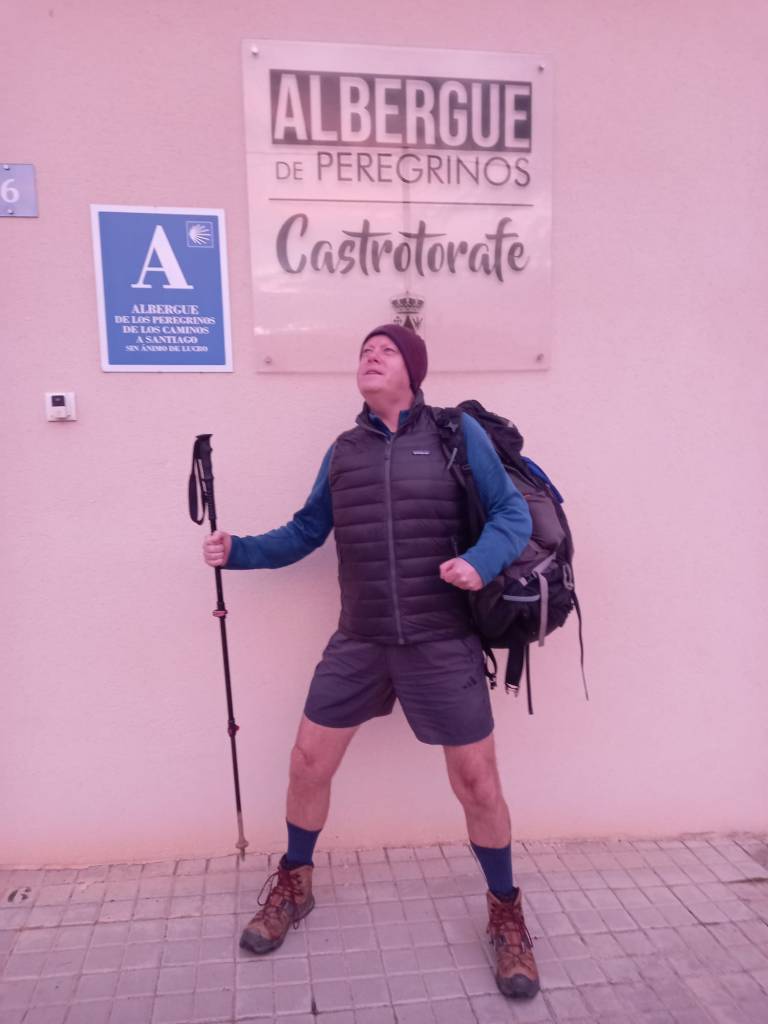
There are also albergues (donativos) along the way, more frequently after Salamanca, that operate on a donation-only basis. The stand-out donativo was, by far, Albergue de Peregrinos Castrotorafe, C/ La Barca, 5 — Fontanillas de Castro. Angela and Paco, the Hospitalera and Hospitalro who run this albergue are camino angels. The beds are new, the bathroom is new, and in the evening we shared a wonderful meal together.
IMPORTANT! Donativo albergues cannot survive without the money that pilgrims donate, and, unfortunately, some pilgrims view these types of albergue as being “free”. If pilgrims don’t donate, these donativos will cease to exist. Part of the reason why they are so important for the Via de la Plata is because there are some pilgrims who are struggling financially and they provide food and accommodation for those pilgrims. The rule of thumb is to donate €20 if food is provided and €10 if only a bed is provided.

4. Cities, towns, and villages.
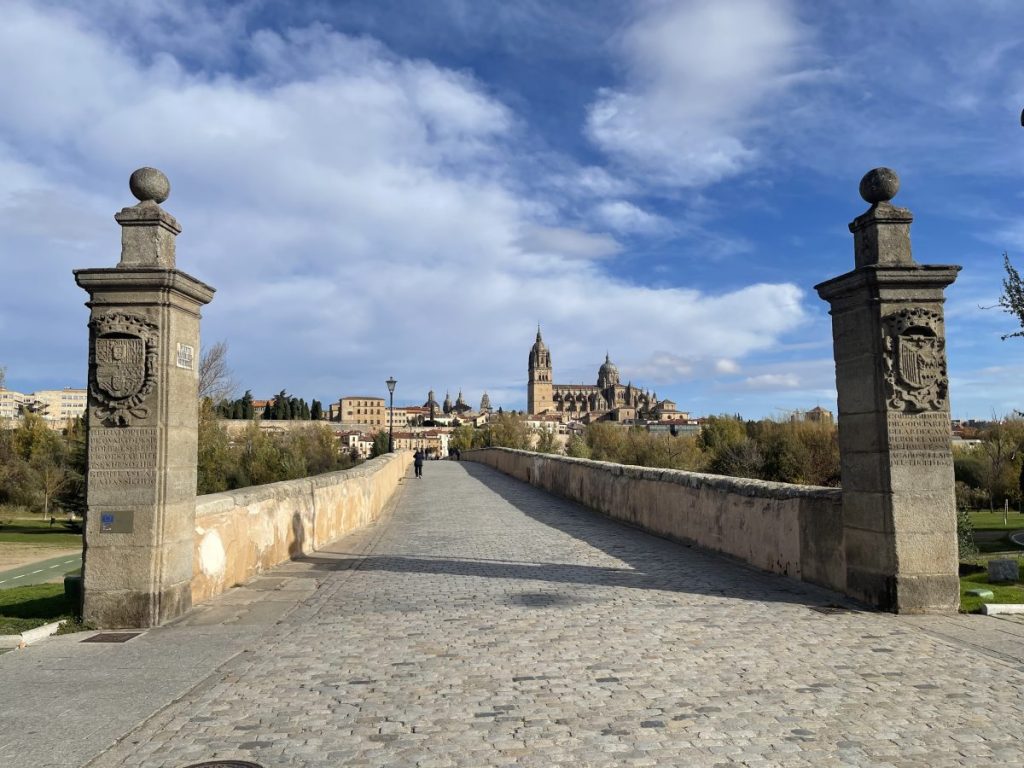
The Via de la Plata starts in Seville and ends in Astorga, and goes through so many beautiful and interesting cities, towns, and villages along the way. I recently wrote a blogpost (https://nevilledavidthomas.com/2025/01/27/local-tips-for-your-first-trip-to-seville/) about the spectacular city of Seville, and, likewise, Astorga is an amazing city to have as a final destination. Mérida is marvelous, with its Roman ruins; Cáceres is charming, with its cobbled medieval streets and its must-see Museo de Cáceres; Salamanca (my favorite city in Spain) reminds one of Oxford, with its university buildings and libraries; Zamora, the grungy sister of Salamanca, with its super-friendly locals and worthwhile-to-visit tapas street; Benavente, which was a complete left-field surprising town that I wish I could have stayed longer in.
And, there are the smaller towns and villages. In Andalusia, the whitewashed buildings are so picturesque and often adorned with glazed tile Catholic images, proudly grouped around an orange-tree-lined square. Further north, many of the villages seem apparently empty and devoid of life, but in the evenings are filled with the farm workers who have been toiling in the fields all day. And, always – even if there are a few grumps – the Spanish people are helpful, hospitable, open, and so much fun!

5. Getting fit.
If you choose to walk the full length of the Via de la Plata, there is a high probability that you will have lost weight, feel fitter, and more mentally positive by the end of it. The first week can be tough, as your body and mind acclimatize, but from then on you get into the rhythm of waking up, walking all day, and then resting in the evenings. I’m 53 now and there are always a zillion reasons for why I convince myself to crash in the sofa as opposed to taking a walk. At the start, in Seville, I was out of shape. When I reached Astorga, I felt that I could run a marathon.
It is very important to note here that you must have the correct clothing and equipment when you take on a long-distance walk. You must be wearing the correct shoe size, the best boots or trail runners for you, and it is advisable to stretch every morning before you head off on another day of walking. It is also important to ensure that what you are consuming is good for you – try to reduce alcohol consumption, eat fruits and vegetables, and snack on nuts in-between meals.
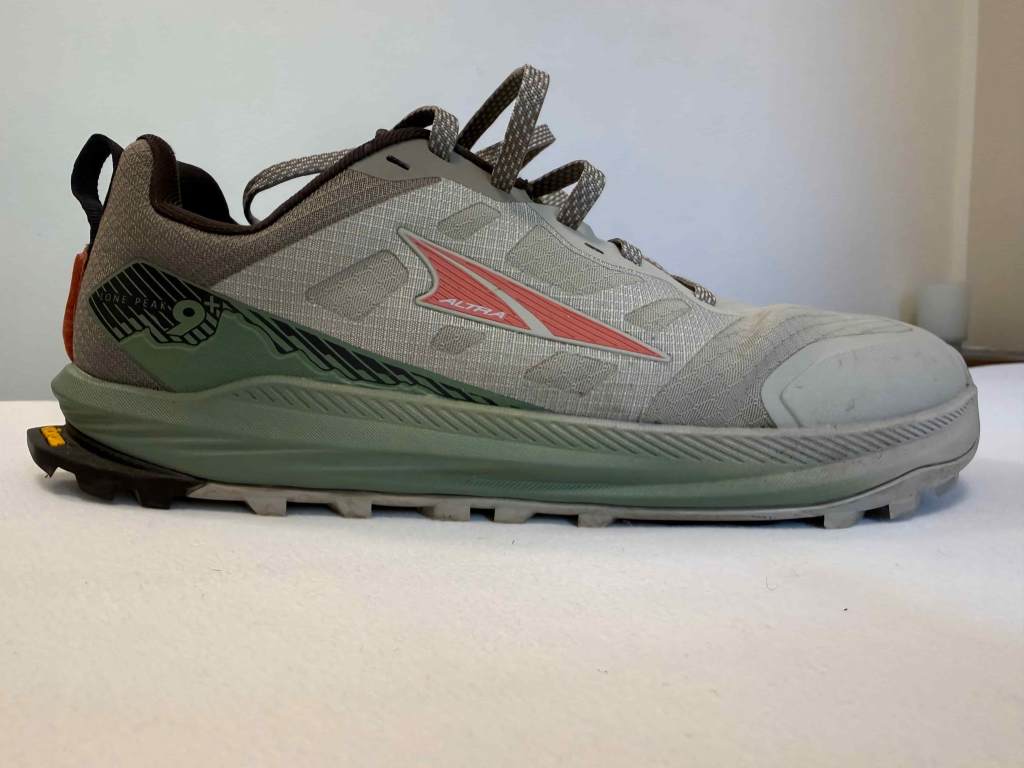
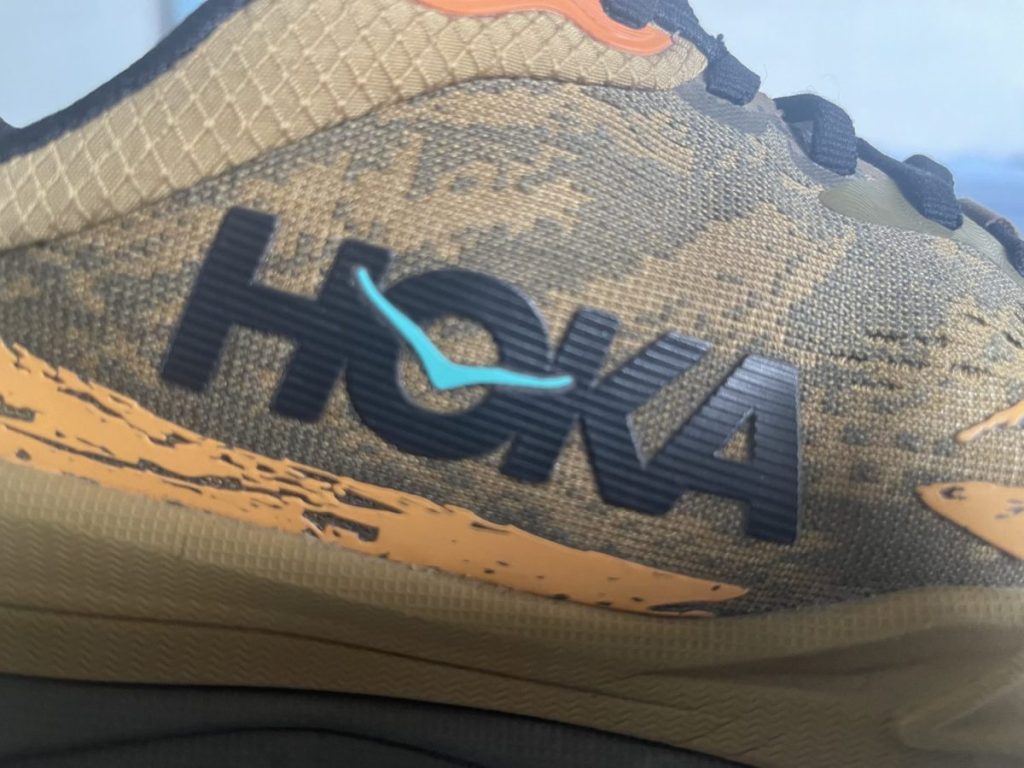
Having completed so many short and long-distance walks, I have bought many different types of footwear. Unless you have an extremely heavy backpack, I would advise against wearing boots for your camino. I was walking the Via de la Plata in a pair of Salomon X Ultra 4’s and they were falling apart by the time Astorga rolled around. My current preference are HOKA trail runners – they are comfortable and, so far, durable. Don’t order footwear online – try them on in a store and make sure to try them on later in the day when your feet swell from your day’s activities. Also, try them on wearing the socks that you will be taking on your camino. https://www.hoka.com/en/us/trail/
6. Food and drink.
Spanish cuisine is world-famous. One of the little luxuries of the Via de la Plata is that you are far from the madding beach crowds of tourists eating their home cuisine in Spain and, instead, you get the opportunity to really eat as the locals do.
Here are a 4 culinary favorites that I loved when walking this camino:
- Cachuela Pâté. You should only eat this occasionally because it isn’t the healthiest food option, but the taste of it on a tostada is as if God were speaking to us directly through food.
- Gazpacho. A cold soup and drink made of raw, blended vegetables – most common in Andalusia. It’s refreshing and healthy.
- Jamón ibérico. A type of cured leg of pork, primarily from Black Iberian pigs. Almadén de la Plata is famous for this meat and I recommend Casa Concha, where they serve excellent dishes with this dark meat.
- Patatas bravas. Cubed potatoes, fried in oil and served warm with a spicy “brava” sauce. Every bar and restaurant seems to have its own way of making this dish. The best one that I have ever had was in Aldeanueva del Camino, at Bar – Hogar del Pensionista, C. Gabriel y Galán, 77.
Many pilgrims choose to eat the pilgrim menu when they arrive at the end of a stage, but the quality is usually poor and for the same money spent you can buy a tastier tapas, platos, or raciones.

7. The Via de la Plata isn’t too crowded.
When I walked (3,109 km) from Prague to Finisterre, I remember at the time that the Camino Francés was very busy and that the Camino Portuguese was a relatively unknown route. This isn’t the case anymore: both the Camino Francés and the Camino Portuguese are the two most popular camino routes.
499,239 pilgrims completed the Camino Francés in 2024, and 95,453 pilgrims completed the Camino Portuguese. Only 9,028 pilgrims completed the Via de la Plata.
This low number, of course, has its pros and cons. The advantage of the low numbers is that you are always guaranteed somewhere to sleep, the locals haven’t become jaded yet with a mass of pilgrims traipsing across their land, and you have space for contemplation. The main disadvantage that I can think of is that it will be more difficult to meet like-minded people who you can share your camino experience with. You may be lucky and meet your “camino family” or you may just run into solitary pilgrims who don’t want to socialize.
If you haven’t walked a camino before, I suggest walking the Camino Francés.
If you have previously walked caminos, the Via de la Plata is for you.
Additional points.
I understand that many women don’t want to change their behavior because of men, but the Via de la Plata does go through some very isolated countryside and my advice for peregrinas is to either walk with someone else or, at the very least, download the Alertcops app before you start walking your camino. If you run into trouble, you can press the SOS button and the police will arrive as soon as they can. They take any case of sexual assault – whether it be flashing or something much graver, very seriously. There have been isolated cases of sexual assault on the Via de la Plata. The Alertcops app website: https://alertcops.ses.mir.es/publico/alertcops/en/
Please don’t walk the Via de la Plata in summer. Some do and some end up dying from heat exhaustion or a heart attack. My advice is to stick to the shoulder seasons, walking between March and May and September and November.
Please don’t feel the urge to pick fruit from the farmers’ fields. The farmers employ security, with binoculars, because there is currently a huge issue with gangs of people stealing produce from the bushes, trees, and vines. If you are caught, it will ruin your day. Besides, the life of a farmer is difficult enough without a self-entitled pilgrim thinking they can eat their way for free along the route as they experience their spiritual journey.
If you have chosen to stay in shared accommodation, with other pilgrims, please try to refrain from waking pilgrims up because they are snoring. It’s all part of the pilgrim experience, and remember that you are paying peanuts for a night’s bed. If someone’s snoring really gets to you, find a hotel or miss a stage so that you won’t be sharing sleeping quarters again.
At the albergue where I was the Hospitalero, we had one female pilgrim who spent an hour in the shower while other pilgrims were waiting for their turn. In the morning, she was angry that she had to wake up early because she wanted to sleep in. A few day’s later, she wrote a horrible review of the albergue. Please remember that albergues have clear exit times for the next day because they need to prepare for the next batch of pilgrims, and please try to refrain from writing bad reviews of family-run albergues that are only charging you a few Euros for a bed. Spread positivity instead.
Please don’t treat the donativo albergues as a free night’s accommodation, unless you really don’t have the available funds. When I made the walk, I shared space in donativos with pilgrims who clearly had the funds to donate, but who, for them, it was easier just to leave in the morning and save their money.
I also want to note that the above five paragraphs only apply to a very small number of people. The vast majority of pilgrims walking the Via de la Plata act as responsible pilgrims, and when I was a Hospitalero, I met so many wonderful pilgrims.
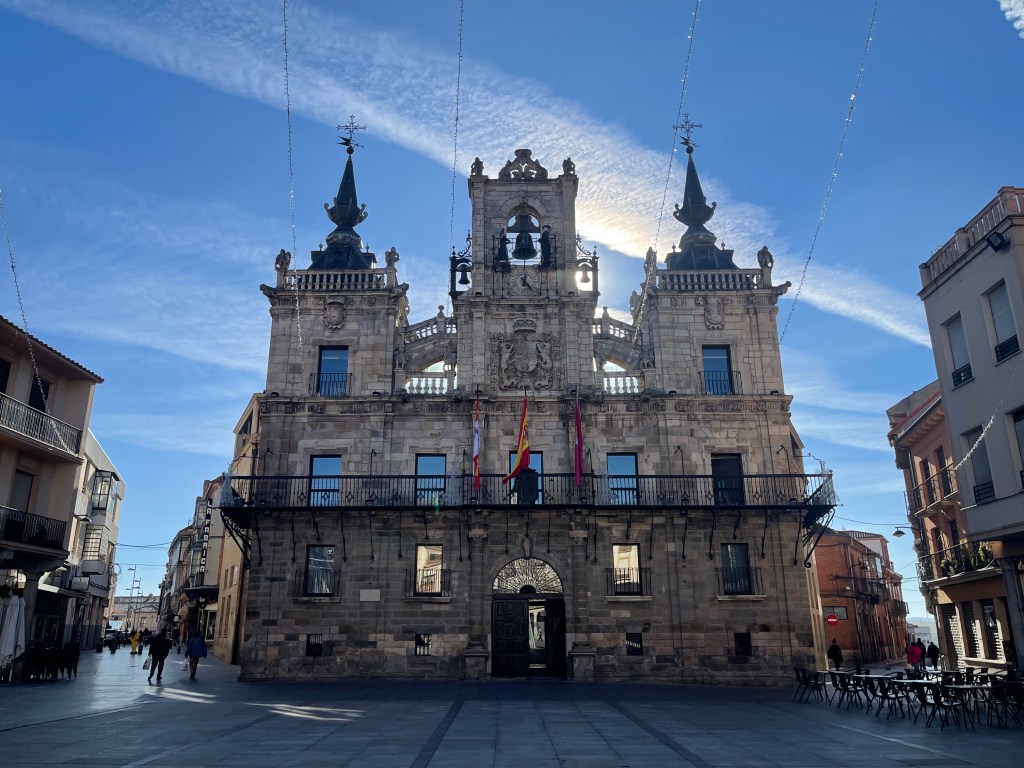
And lastly, the final reason why I loved walking the Via de la Plata was because it finished in Astorga – directly on the Plaza Mayor de Astorga. As you walk into the square, the Via de la Plata finishes and joins with the Camino Francés. From here, if you so wish to, you can then continue on to Santiago de Compostela.
Have a wonderful time walking the Via de la Plata!
This post contains NO AFFILIATE LINKS and as the author of this post, I earn nothing for recommendations I suggest in my posts on this website. Affiliate linking, when conducted correctly, can be a benefit for the reader and the author, but I choose not to make an additional income from places and products that I personally recommend from my own personal experience. I am not a fan of affiliate linking as, is often the case, an author promotes a business primarily for the financial incentive. Neville David Thomas.
Read more blog posts: https://nevilledavidthomas.com/blog/
Have you walked the Via de la Plata? Do you agree or disagree with any of the content that I have mentioned in this post? Do you have any additional information that you would like to share? Please leave a comment below!



 Neville David Thomas
Leave a reply to Which Trail Running Shoes? – Neville David Thomas Cancel reply